

Uniportal VATS: How Single-Incision Thoracic Surgery Works
14/08/2026
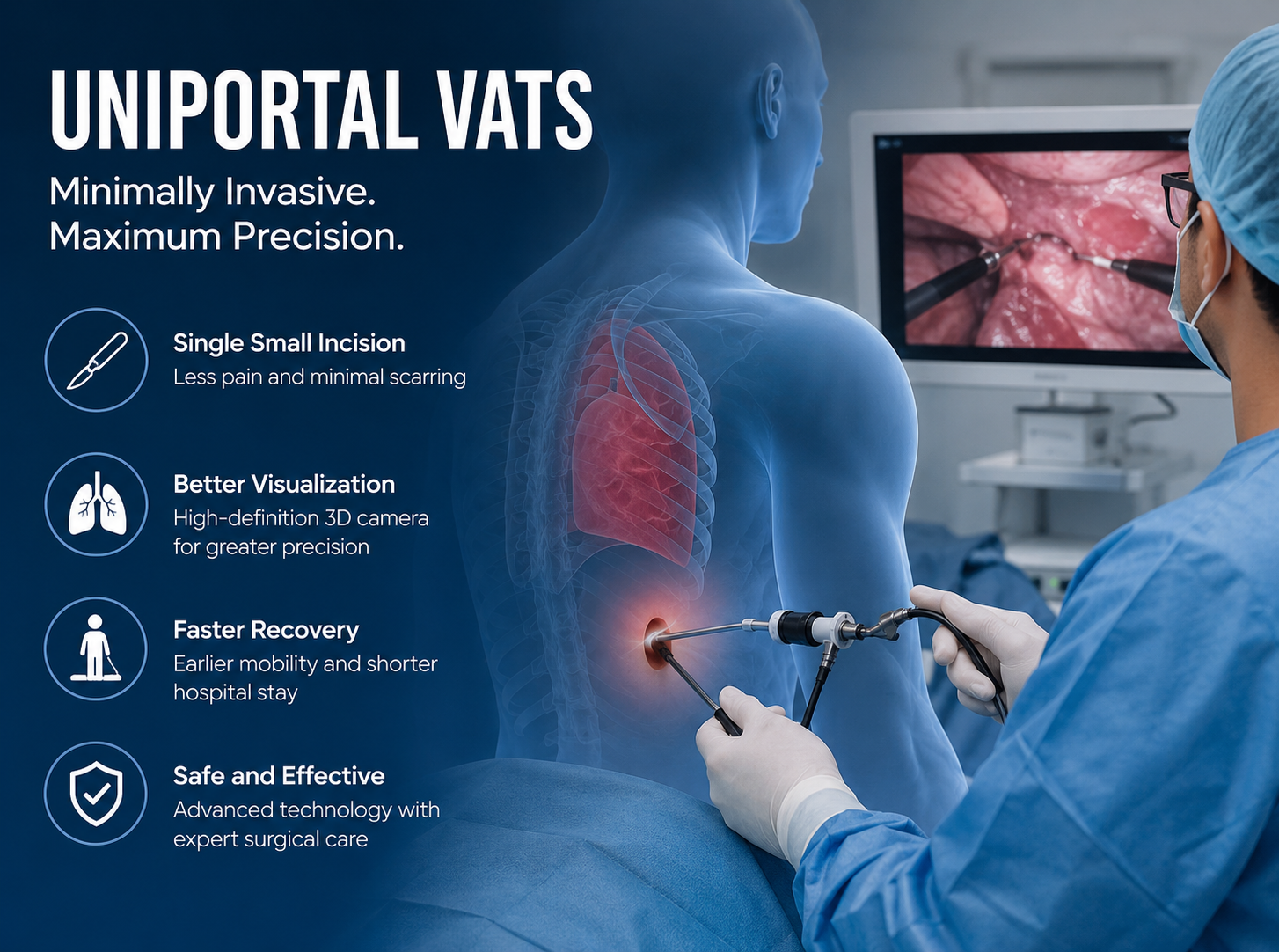
Thoracic surgery has advanced significantly with the development of minimally invasive techniques. One such approach is Uniportal Video-Assisted Thoracic Surgery (VATS), which allows selected chest procedures to be performed through a single small incision.
Compared with conventional open chest surgery, uniportal VATS is designed to minimise surgical access while allowing the surgeon to treat or diagnose certain conditions within the chest. It may be considered for selected lung, pleural and mediastinal conditions after a detailed medical evaluation.
What Is Uniportal VATS?
Uniportal VATS is a minimally invasive thoracic surgical technique in which the surgeon accesses the chest through one small incision, usually between the ribs.
A thoracoscope, which is a small camera, provides a magnified view of the structures inside the chest. Specialised surgical instruments are introduced through the same incision, allowing the surgeon to perform the required procedure.
The technique can be used for different types of thoracic procedures depending on the patient's condition and the surgeon's assessment.
How Does Uniportal VATS Work?
The procedure is performed under general anaesthesia. After the patient is prepared for surgery, the surgeon creates a small incision to access the chest.
A camera is inserted through the incision to provide a clear view of the lungs and surrounding structures. Surgical instruments are then used through the same access point to perform the planned procedure.
Depending on the diagnosis, the operation may involve removing a portion of the lung, treating an abnormal area, removing a tumour or addressing certain pleural conditions.
The exact surgical approach varies according to the condition being treated.
Which Conditions May Be Considered for Uniportal VATS?
Uniportal VATS can be used for a range of thoracic procedures in appropriately selected patients. Depending on the individual case, it may be considered for:
- Selected lung tumours and lung cancers
- Lung nodules requiring surgical assessment
- Pneumothorax and certain air-leak conditions
- Pleural diseases
- Certain pleural infections
- Mediastinal tumours
- Some benign lung conditions
- Selected conditions requiring lung resection
Not every chest condition can be treated using uniportal VATS. The appropriate technique is determined after reviewing medical history, imaging, lung function and other relevant investigations.
What Are the Potential Benefits of Uniportal VATS?
One of the main objectives of minimally invasive thoracic surgery is to achieve the required surgical treatment while reducing the size of the surgical access.
Potential benefits for suitable patients may include:
Smaller Incision
Uniportal VATS uses a single small incision rather than the larger incision associated with some conventional open procedures.
Less Surgical Trauma
The minimally invasive approach may reduce disruption to tissues around the surgical area compared with certain traditional techniques.
Reduced Postoperative Discomfort
Some patients may experience less postoperative pain because the surgical access is smaller. Pain and recovery can still vary depending on the procedure and individual patient.
Earlier Mobility
Patients may be able to start moving and performing breathing exercises sooner as part of their recovery, depending on their condition and the procedure performed.
Recovery
For appropriately selected patients, minimally invasive surgery may support a smoother recovery and an earlier return to normal activities. Recovery time varies from one patient to another.
Is Uniportal VATS Suitable for Everyone?
Uniportal VATS is not automatically suitable for every patient.
The thoracic surgeon may consider several factors before recommending the procedure, including:
- Type of chest condition
- Location and size of the lesion or tumour
- Stage of the disease
- Lung function
- Previous chest surgery
- Presence of infection or inflammation
- Overall health
- Complexity of the planned procedure
In certain situations, multiportal VATS or open surgery may be more appropriate. The safest and most effective surgical approach should always be decided by the treating specialist.
What Investigations May Be Needed Before Surgery?
Before undergoing thoracic surgery, patients may need several investigations to understand the condition and assess their suitability for surgery.
Depending on the diagnosis, these may include:
- Chest X-ray
- CT scan
- PET-CT in selected cases
- Blood investigations
- Pulmonary function tests
- Bronchoscopy
- Tissue biopsy
- Cardiac evaluation when required
The surgeon reviews the investigation results along with the patient's medical history before planning the procedure.
What Happens After Uniportal VATS?
After surgery, the patient is monitored closely by the medical team. Pain management, breathing, oxygen levels and overall recovery are assessed.
Patients may be encouraged to perform breathing exercises and gradually increase physical activity as advised.
The length of hospitalisation depends on the type of procedure, the patient's health and how quickly recovery progresses.
Once discharged, patients should follow the surgeon's instructions regarding medication, wound care, physical activity and follow-up appointments.
Why Is Thoracic Surgical Expertise Important?
Thoracic surgery involves delicate structures such as the lungs, airways, pleura and mediastinum. Minimally invasive procedures require specialised training, surgical experience and careful patient selection.
At Santosham Chest Hospital, thoracic surgery is part of its specialised chest care services.
Patients can also learn more about Dr. Rajiv Santosham, a thoracic surgeon with expertise in minimally invasive thoracic procedures, including uniportal VATS. His areas of expertise include procedures such as uniportal VATS lobectomy, decortication, bullectomy and mediastinal tumour excision.
For more information about his qualifications and areas of expertise, visit the Dr. Rajiv Santosham profile.
When Should You Consult a Thoracic Surgeon?
A thoracic surgeon may be consulted when a patient has been diagnosed with a chest condition that may require surgical treatment.
A specialist evaluation may be recommended when investigations identify:
- A lung nodule or mass
- A suspected lung tumour
- Recurrent pneumothorax
- Persistent pleural problems
- A mediastinal mass
- Certain complex chest infections
- Other conditions requiring surgical assessment
Symptoms alone do not necessarily mean that surgery is required. A specialist assessment helps determine whether surgery, medication, observation or further investigation is appropriate.
Choosing the Right Surgical Approach
The development of minimally invasive techniques has expanded the treatment options available for many thoracic conditions. However, the smallest incision is not always the best option for every patient.
The surgical approach should be selected based on the patient's diagnosis, overall health, anatomy and treatment requirements.
A detailed consultation with an experienced thoracic surgeon can help patients understand their condition, available treatment options and the expected recovery process.
Conclusion
Uniportal VATS is an advanced minimally invasive approach that allows selected thoracic procedures to be performed through a single small incision. It can be used for various lung, pleural and mediastinal conditions depending on the patient's individual circumstances.
With appropriate patient selection and specialised surgical expertise, minimally invasive thoracic surgery can provide an alternative to conventional open procedures for suitable cases.
If you have been diagnosed with a lung, pleural or other chest condition that may require surgery, consulting a qualified thoracic surgeon can help you understand the available treatment options and determine the most appropriate approach for your condition.
RECENT BLOGS
- Why Does a Cold Sometimes Turn Into a Chest Infection? Understanding the Warning Signs
- Why a Dry Cough and Breathlessness During Activity Should Not Be Ignored
- Persistent Cough or Tuberculosis? When Should You Get Tested for TB?
- Why Asthma Gets Worse at Night: Causes & What to Do
- Uniportal VATS: How Single-Incision Thoracic Surgery Works
- Is Pulmonary Tuberculosis Curable? Understanding Modern Treatment
- Gastroscopy Treatment in Chennai | Upper GI Endoscopy | Santosham Chest Hospital
- How CT-Guided Biopsy Helps Diagnose Lung Tumors
- Best Ways to Keep Your Lungs Healthy Naturally
- Best Interstitial Lung Disease Treatment in Chennai – Symptoms, Causes & Care
- Why Breathing Problems Increase During Summer in Chennai
- What to Expect During Your First Lung Checkup
- Top Causes of Asthma Attacks and How to Prevent Them
- Inside a Super Specialty Chest Hospital: Facilities Explained
- Best Treatment Options for Asthma in Adults
- Early Warning Signs of Lung Diseases You Should Never Ignore
- Why Early Stomach Testing Can Prevent Serious Complications
- How Breathing Problems Can Indicate a Surgical Chest Condition
- What Is Bronchoscopy? Procedure, Uses, and Benefits Explained
- Personalized Esophageal Surgery: What Patients Should Know
- Global Thoracic Surgery Market & Growth Trends in 2026
- When Chest Pain Is Not a Heart Attack: Other Possible Causes
- Hidden Causes of High Blood Pressure: Reasons Most People Ignore
- Signs Your Body Needs Physiotherapy: Don’t Ignore These Early Symptoms
- Understanding Echocardiography: What It Reveals About Your Heart
- Top Benefits of Physiotherapy for Heart and Lung Patients
- Signs You Might Have High Cholesterol and How to Lower It Naturally
- Contrast vs. Non-Contrast CT Scans: Key Differences Explained
- Frequently Asked Questions About Gastroscopy: A Patient-Friendly Guide
- How Better Sleep Improves Lung Health and Eases Breathing Problems
- Breathe Better, Live Better: How Yoga Improves Lung and Heart Health
- Managing High Cholesterol Naturally: Food, Exercise & Lifestyle
- Tips for Traveling Safely with Heart or Lung Conditions
- Understanding Hypertension: Causes, Symptoms, and Control Strategies
- Why Regular Checkups Matter: Early Detection for Heart and Lung Health
- Understanding Sleep Apnea: Causes, Symptoms, and Treatment Options
- How Diabetes Affects Your Heart and Lungs: What You Need to Know
- Post-Heart Surgery Care: Essential Tips for Faster Recovery and Better Heart Health
- Physiotherapy in Healthcare: Why It's Essential for Post-Operative Recovery
- A Complete Guide to Ultrasonography: Procedure, Benefits, and Applications
- The Complete Guide to Pulmonary Function Tests: Preparing, Procedure, and Results
- Breathing Easy: Simple Habits for Better Lung Health and Wellness
- Understanding Asthma: Symptoms, Triggers, and How to Manage It Effectively
- Recognizing a Heart Attack: Early Symptoms and Immediate Steps to Take
- CT Scans: Everything You Need to Know � Procedure, Precautions, and How They Help Your Health
- Choosing the Right Hospital: What Patients Need to Know for Better Healthcare
- The Journey to Better Digestive Health: Identifying Issues with Gastroscopy
- Simple Food Habits to Boost Your Immune System and Respiratory Health
- The Importance of Regular Health Screenings for Heart Disease Prevention
- Fit for Life: The Health Benefits of Regular Exercise for Everyone
- Living with Pulmonary Hypertension: Managing Symptoms and Improving Quality of Life
- Exploring the Lifelong Benefits of Physical Activity on Heart Health
- The Role of CT Scans in Diagnosing Respiratory Conditions: What Patients Need to Know
- Unlocking the Benefits of Regular Physical Activity for Heart Health
- The Role of Diet in Asthma Management: Foods to Eat and Avoid
- The Role of CT Scans in Diagnosing Respiratory Disorders
- How to Prepare for Thoracic Surgery: A Patients Guide
- BreatheWell Insights: Navigating Respiratory Health with Santosham Chest Hospital
- Gastroscopy Demystified: Your Essential Guide to Digestive Health
- Thoracic back pain treatment
- Quit smoking save your lungs � how to quit smoking?
- Asthma Symptoms and Treatments You Should Know
- Best Chest Hospital in India
- Exercises for COPD patients
- What to Expect at a Pulmonary Function Test
- Types of Asthma Medications
- Tips for keeping your lungs healthy
- Santosham Hospital- the best Pulmonology Hospital in India
- Guide to Gastroscopy - Symptoms & Procedure
- COPD - Know the Signs and Symptoms & Get the Facts
- Living with Pulmonary Hypertension
- Smoking and COPD Effects
- Earliest Symptoms of Lung Cancer
- What You Need To Know About Asthma
- Side Effects of Eating Too Much Chocolate
- Top 4 Ways You Can Purify Your Lungs Naturally
- Rotational shifts are disrupting your metabolism
- How to survive heart attack when you�re alone?
- Tips for a Healthy Mind, Body And Spirit
- Seven Ways to Cut the Junk Food
- How Fruits and Vegetables are important for the diet?
- 5 reasons why walk is the best workout
- 7 benefits of eating healthy and exercising regularly
- 7 Best Exercise To Keep Your Heart Healthy Forever
- 10 Good Habits for Healthy Heart
- 10 Foods to Keep your Heart Healthy