

Why a Dry Cough and Breathlessness During Activity Should Not Be Ignored
September 23, 2026
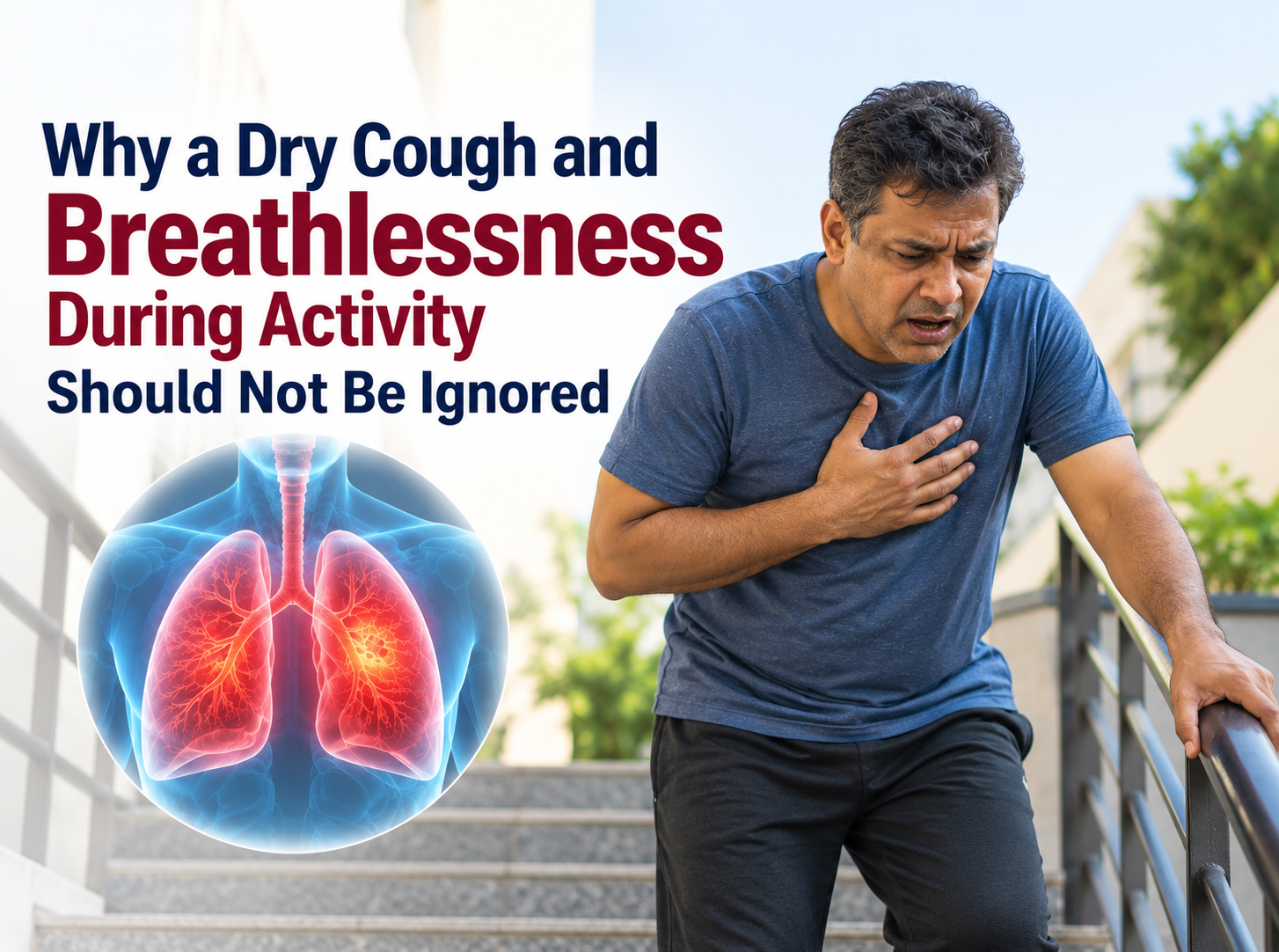
A dry cough that refuses to go away or feeling unusually breathless while climbing stairs may seem like minor problems at first. Some people assume these symptoms are caused by tiredness, ageing, pollution, or a temporary respiratory infection. However, when they persist or gradually become worse, they may indicate an underlying lung condition that requires medical evaluation.
Persistent dry cough and breathlessness during physical activity are symptoms associated with several respiratory conditions, including Interstitial Lung Disease (ILD). Recognising changes in your breathing and seeking medical advice at the right time can help identify the underlying cause.
What Is Interstitial Lung Disease?
Interstitial Lung Disease is a broad term used for a group of conditions that affect the interstitium, the tissue surrounding the tiny air sacs within the lungs.
In some forms of ILD, inflammation or scarring can make the lung tissue thicker and less flexible. This can affect the lungs' ability to expand normally and transfer oxygen effectively into the bloodstream.
ILD is not a single disease, and its causes, progression, and treatment can vary considerably from one person to another.
Why Can ILD Cause a Persistent Dry Cough?
One of the symptoms associated with ILD is a persistent dry cough, meaning a cough that generally does not produce phlegm.
Changes or irritation within the lung tissue may contribute to the coughing reflex. Unlike a cough caused by a common cold, which usually improves as the infection resolves, an ILD-related cough may persist or gradually become more noticeable.
However, a dry cough alone does not mean that someone has ILD. Asthma, allergies, acid reflux, certain medications, respiratory infections, and other conditions can also cause prolonged coughing.
A medical assessment is necessary to determine the actual cause.
Why Does Breathlessness First Appear During Physical Activity?
In the early stages of some lung conditions, a person may breathe comfortably while sitting or resting but become short of breath during physical activity.
You may notice breathlessness while:
-
Walking quickly
-
Climbing stairs
-
Walking uphill
-
Carrying groceries
-
Exercising
-
Performing household activities
-
Walking distances that previously felt comfortable
Physical activity increases the body's demand for oxygen. When the lungs cannot transfer oxygen as efficiently as they should, breathlessness may become noticeable during exertion before it appears at rest.
Because the change can happen gradually, people sometimes reduce their activities without realising that their breathing capacity has changed.
When Is Breathlessness More Than Just Being Unfit?
Feeling out of breath after strenuous exercise can be normal. What deserves attention is a noticeable change from your usual ability.
For example, you may previously have climbed two flights of stairs comfortably but now need to stop after one. You might find yourself walking more slowly than family members or pausing frequently during activities that were previously easy.
Persistent or progressively worsening breathlessness should be discussed with a healthcare professional rather than automatically being attributed to poor fitness or age.
What Other Symptoms Can Occur With ILD?
Symptoms vary depending on the type and severity of Interstitial Lung Disease. In addition to dry cough and breathlessness, some people may experience:
-
Persistent tiredness
-
Reduced exercise tolerance
-
Chest discomfort
-
Unexplained weight loss in some cases
-
Changes in the fingertips or nails in certain conditions
These symptoms can occur with many other medical conditions as well. Their presence does not confirm ILD.
What Can Cause Interstitial Lung Disease?
There are many different forms of ILD, and identifying the underlying cause is an important part of evaluation.
Possible associations can include:
Occupational or Environmental Exposure
Long-term exposure to certain types of dust, mould, chemicals, or other airborne substances may contribute to particular forms of lung disease.
Your doctor may therefore ask about your occupation, workplace environment, hobbies, home environment, and previous exposures.
Autoimmune Conditions
Some autoimmune and connective tissue disorders can affect the lungs and lead to interstitial changes.
Certain Medications and Treatments
Some medicines and medical treatments can occasionally affect lung tissue. Doctors may review current and previous medications as part of the assessment.
Unknown Causes
In some cases, the cause of interstitial lung disease cannot be clearly identified even after detailed evaluation. Certain forms of pulmonary fibrosis fall within this category.
How Is Interstitial Lung Disease Evaluated?
Because ILD includes many different conditions, diagnosis often involves combining information from several investigations rather than relying on one test.
Medical History
Your doctor may ask about your symptoms, occupation, environmental exposure, smoking history, medications, previous illnesses, autoimmune conditions, and family history.
Lung Function Tests
Pulmonary function tests can help assess how well your lungs are working and may provide information about lung volumes and gas transfer.
Imaging Tests
Chest imaging, particularly high-resolution computed tomography (HRCT), can provide detailed images of the lung tissue. Certain patterns may help specialists narrow down the possible type of ILD.
Blood Tests
Blood investigations may sometimes be recommended to look for evidence of autoimmune or other conditions associated with ILD.
Additional investigations may be necessary depending on the individual's symptoms and test findings.
Why Is Early Evaluation Important?
Some interstitial lung diseases can progress over time. Identifying the underlying condition earlier can allow doctors to determine an appropriate management plan and monitor changes in lung function.
It is particularly important to seek medical advice if breathlessness is becoming progressively worse or your ability to perform everyday activities is declining.
For specialised respiratory assessment, learn more about Management of Interstitial Lung Disease at Santosham Chest Hospital.
Can Interstitial Lung Disease Be Managed?
Management depends on the specific type of ILD, its cause, severity, progression, and the patient's overall health.
Depending on the diagnosis, management may involve medicines to address inflammation or slow disease progression, treatment of an underlying condition, pulmonary rehabilitation, oxygen therapy when required, lifestyle measures, and regular monitoring.
Because ILD includes many different diseases, treatment needs to be individualised rather than following the same approach for every patient.
When Should You See a Chest Specialist?
Consider seeking medical evaluation if you experience:
-
A dry cough that continues for several weeks
-
Breathlessness that is gradually getting worse
-
Difficulty performing activities that were previously comfortable
-
Unexplained reduction in exercise tolerance
-
Persistent respiratory symptoms without a clear cause
Sudden or severe breathing difficulty requires urgent medical attention.
Pay Attention to Changes in Your Breathing
A persistent dry cough or becoming breathless during everyday activities should not automatically be dismissed as ageing, lack of fitness, or pollution. These symptoms have many possible causes, ranging from relatively common conditions to chronic lung diseases such as ILD.
The important step is determining why the symptoms are occurring.
If you notice that your cough is not improving or activities such as walking and climbing stairs are becoming increasingly difficult, consider consulting a respiratory specialist. Appropriate evaluation can help identify the underlying cause and guide further care.
Santosham Chest Hospital provides specialised evaluation and management for Interstitial Lung Disease and other respiratory conditions, with care based on each patient's diagnosis and individual needs.
RECENT BLOGS
- Why Does a Cold Sometimes Turn Into a Chest Infection? Understanding the Warning Signs
- Why a Dry Cough and Breathlessness During Activity Should Not Be Ignored
- Persistent Cough or Tuberculosis? When Should You Get Tested for TB?
- Why Asthma Gets Worse at Night: Causes & What to Do
- Uniportal VATS: How Single-Incision Thoracic Surgery Works
- Is Pulmonary Tuberculosis Curable? Understanding Modern Treatment
- Gastroscopy Treatment in Chennai | Upper GI Endoscopy | Santosham Chest Hospital
- How CT-Guided Biopsy Helps Diagnose Lung Tumors
- Best Ways to Keep Your Lungs Healthy Naturally
- Best Interstitial Lung Disease Treatment in Chennai – Symptoms, Causes & Care
- Why Breathing Problems Increase During Summer in Chennai
- What to Expect During Your First Lung Checkup
- Top Causes of Asthma Attacks and How to Prevent Them
- Inside a Super Specialty Chest Hospital: Facilities Explained
- Best Treatment Options for Asthma in Adults
- Early Warning Signs of Lung Diseases You Should Never Ignore
- Why Early Stomach Testing Can Prevent Serious Complications
- How Breathing Problems Can Indicate a Surgical Chest Condition
- What Is Bronchoscopy? Procedure, Uses, and Benefits Explained
- Personalized Esophageal Surgery: What Patients Should Know
- Global Thoracic Surgery Market & Growth Trends in 2026
- When Chest Pain Is Not a Heart Attack: Other Possible Causes
- Hidden Causes of High Blood Pressure: Reasons Most People Ignore
- Signs Your Body Needs Physiotherapy: Don’t Ignore These Early Symptoms
- Understanding Echocardiography: What It Reveals About Your Heart
- Top Benefits of Physiotherapy for Heart and Lung Patients
- Signs You Might Have High Cholesterol and How to Lower It Naturally
- Contrast vs. Non-Contrast CT Scans: Key Differences Explained
- Frequently Asked Questions About Gastroscopy: A Patient-Friendly Guide
- How Better Sleep Improves Lung Health and Eases Breathing Problems
- Breathe Better, Live Better: How Yoga Improves Lung and Heart Health
- Managing High Cholesterol Naturally: Food, Exercise & Lifestyle
- Tips for Traveling Safely with Heart or Lung Conditions
- Understanding Hypertension: Causes, Symptoms, and Control Strategies
- Why Regular Checkups Matter: Early Detection for Heart and Lung Health
- Understanding Sleep Apnea: Causes, Symptoms, and Treatment Options
- How Diabetes Affects Your Heart and Lungs: What You Need to Know
- Post-Heart Surgery Care: Essential Tips for Faster Recovery and Better Heart Health
- Physiotherapy in Healthcare: Why It's Essential for Post-Operative Recovery
- A Complete Guide to Ultrasonography: Procedure, Benefits, and Applications
- The Complete Guide to Pulmonary Function Tests: Preparing, Procedure, and Results
- Breathing Easy: Simple Habits for Better Lung Health and Wellness
- Understanding Asthma: Symptoms, Triggers, and How to Manage It Effectively
- Recognizing a Heart Attack: Early Symptoms and Immediate Steps to Take
- CT Scans: Everything You Need to Know � Procedure, Precautions, and How They Help Your Health
- Choosing the Right Hospital: What Patients Need to Know for Better Healthcare
- The Journey to Better Digestive Health: Identifying Issues with Gastroscopy
- Simple Food Habits to Boost Your Immune System and Respiratory Health
- The Importance of Regular Health Screenings for Heart Disease Prevention
- Fit for Life: The Health Benefits of Regular Exercise for Everyone
- Living with Pulmonary Hypertension: Managing Symptoms and Improving Quality of Life
- Exploring the Lifelong Benefits of Physical Activity on Heart Health
- The Role of CT Scans in Diagnosing Respiratory Conditions: What Patients Need to Know
- Unlocking the Benefits of Regular Physical Activity for Heart Health
- The Role of Diet in Asthma Management: Foods to Eat and Avoid
- The Role of CT Scans in Diagnosing Respiratory Disorders
- How to Prepare for Thoracic Surgery: A Patients Guide
- BreatheWell Insights: Navigating Respiratory Health with Santosham Chest Hospital
- Gastroscopy Demystified: Your Essential Guide to Digestive Health
- Thoracic back pain treatment
- Quit smoking save your lungs � how to quit smoking?
- Asthma Symptoms and Treatments You Should Know
- Best Chest Hospital in India
- Exercises for COPD patients
- What to Expect at a Pulmonary Function Test
- Types of Asthma Medications
- Tips for keeping your lungs healthy
- Santosham Hospital- the best Pulmonology Hospital in India
- Guide to Gastroscopy - Symptoms & Procedure
- COPD - Know the Signs and Symptoms & Get the Facts
- Living with Pulmonary Hypertension
- Smoking and COPD Effects
- Earliest Symptoms of Lung Cancer
- What You Need To Know About Asthma
- Side Effects of Eating Too Much Chocolate
- Top 4 Ways You Can Purify Your Lungs Naturally
- Rotational shifts are disrupting your metabolism
- How to survive heart attack when you�re alone?
- Tips for a Healthy Mind, Body And Spirit
- Seven Ways to Cut the Junk Food
- How Fruits and Vegetables are important for the diet?
- 5 reasons why walk is the best workout
- 7 benefits of eating healthy and exercising regularly
- 7 Best Exercise To Keep Your Heart Healthy Forever
- 10 Good Habits for Healthy Heart
- 10 Foods to Keep your Heart Healthy