

What Is a Mediastinal Mass? Understanding Symptoms, Diagnosis and When Surgery May Be Needed
November 11, 2026
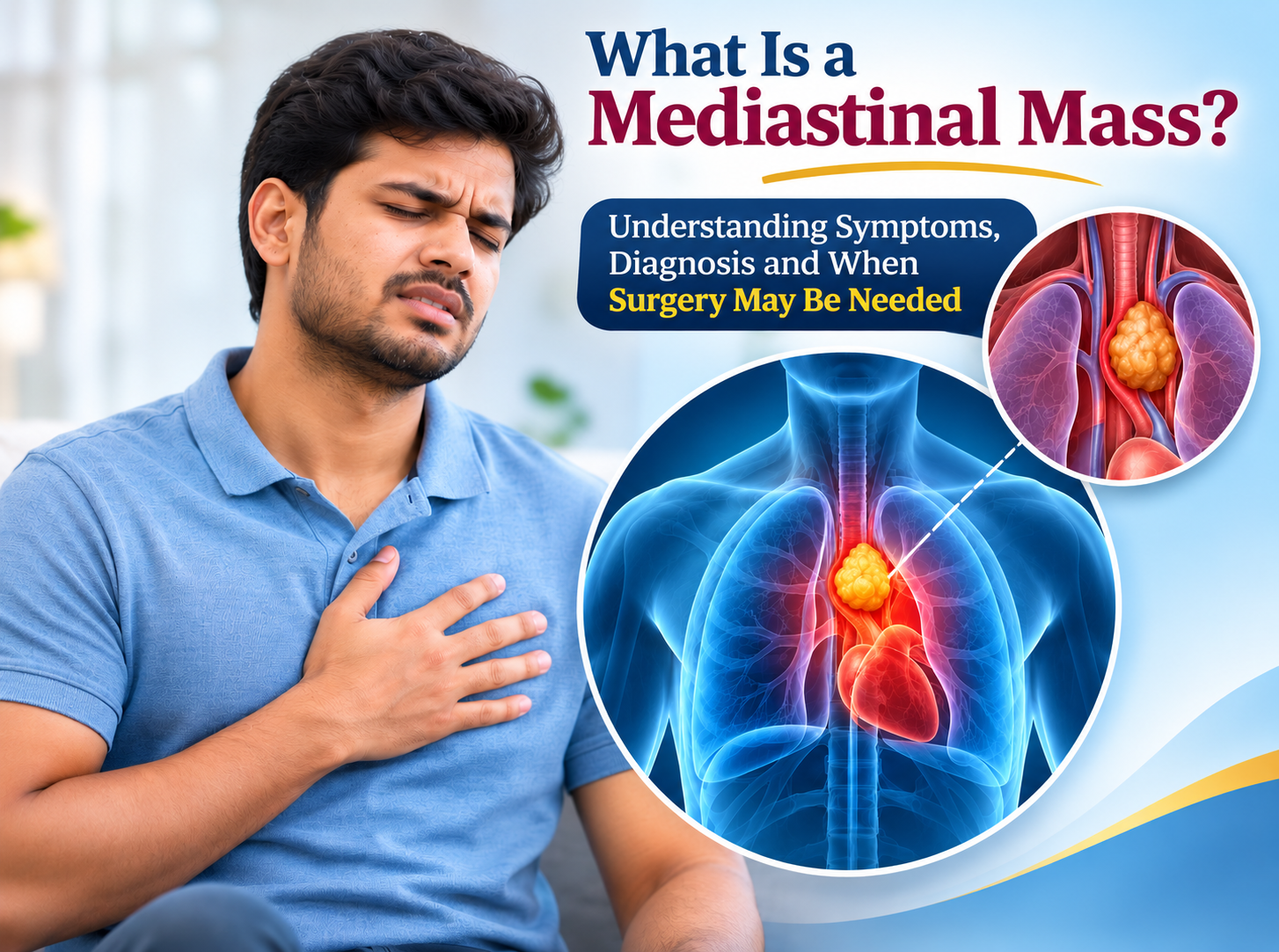
A mediastinal mass is an abnormal growth or lump that develops in the mediastinum, the central area of the chest between the lungs. This region contains important structures, including the heart, major blood vessels, trachea, esophagus, lymph nodes, and thymus gland.
Some mediastinal masses are discovered unexpectedly during a chest X-ray or CT scan performed for another medical reason. Others may cause symptoms such as chest discomfort, persistent coughing, or breathing difficulties.
Although discovering a mass in the chest can be concerning, not every mediastinal mass is cancerous or requires surgery. Understanding its possible causes, symptoms, and diagnostic methods can help patients make informed decisions about their medical care.
What Is the Mediastinum?
The mediastinum is the space located between the right and left lungs. It extends from the breastbone at the front of the chest to the spine at the back.
This area contains several vital structures that support breathing, circulation, and swallowing.
These include:
-
Heart and surrounding structures
-
Major blood vessels
-
Trachea or windpipe
-
Esophagus or food pipe
-
Thymus gland
-
Lymph nodes
-
Nerves and other connective tissues
Because many important organs and structures are located within this relatively small space, an abnormal growth may sometimes affect nearby tissues.
What Is a Mediastinal Mass?
A mediastinal mass refers to an abnormal lump, growth, or enlargement within the mediastinum.
Mediastinal masses may be benign (noncancerous) or malignant (cancerous). They can also develop from different types of tissues.
Some masses grow slowly and remain without symptoms for years. Others may enlarge or press against surrounding structures, leading to noticeable discomfort.
The location, size, and characteristics of the mass help doctors determine which condition may be responsible.
What Are the Common Types of Mediastinal Masses?
Several different conditions can cause masses to develop within the mediastinum.
1. Thymic Tumors
The thymus is a gland located in the front part of the chest, behind the breastbone.
Tumors arising from this gland include thymomas and thymic carcinomas.
Some thymic tumors are discovered incidentally, while others may cause symptoms if they grow large enough to affect nearby structures.
Thymomas can also be associated with certain autoimmune conditions, including myasthenia gravis.
2. Mediastinal Cysts
Mediastinal cysts are fluid-filled structures that may develop in different parts of the mediastinum.
Examples include bronchogenic cysts and pericardial cysts.
Many cysts are benign and may not cause symptoms. However, larger cysts can sometimes compress nearby structures or cause complications.
3. Enlarged Lymph Nodes
Lymph nodes within the mediastinum may become enlarged because of infections, inflammatory diseases, or certain cancers.
Conditions such as tuberculosis, sarcoidosis, and lymphoma can sometimes cause mediastinal lymph node enlargement.
The underlying cause must be identified before treatment is recommended.
4. Lymphoma
Lymphoma is a cancer affecting cells of the lymphatic system.
Some types of lymphoma can involve lymph nodes in the mediastinum and may produce a noticeable mass.
Treatment usually depends on the specific type and stage of lymphoma and may involve systemic therapies rather than surgery to remove the mass.
5. Neurogenic Tumors
Neurogenic tumors arise from nerve-related tissues and are more commonly found in the posterior mediastinum, near the spine.
Some are benign, while others may require further investigation or treatment.
What Are the Symptoms of a Mediastinal Mass?
Symptoms vary depending on the mass's size, location, growth pattern, and effect on nearby structures.
Some people may not experience any symptoms, particularly when the mass is small.
Possible symptoms include:
-
Persistent cough
-
Chest discomfort or pressure
-
Shortness of breath
-
Difficulty swallowing
-
Hoarseness of voice
-
Wheezing or noisy breathing
-
Swelling of the face, neck, or upper chest
-
Unexplained fever or weight loss in certain conditions
These symptoms can occur with many other medical conditions and do not necessarily indicate a mediastinal mass.
Why Can a Mediastinal Mass Cause Breathing Problems?
The trachea and major airways pass through the mediastinum.
If a mass becomes large enough to compress these structures, it may interfere with normal airflow.
This can lead to coughing, wheezing, shortness of breath, or difficulty breathing in certain positions.
Some patients may notice that symptoms become more uncomfortable when lying flat.
Significant airway compression can be serious and requires prompt medical evaluation.
Can a Mediastinal Mass Affect Swallowing?
Yes. The esophagus also passes through the mediastinum.
A mass pressing against the esophagus may make swallowing uncomfortable or cause food to feel stuck in the chest.
However, difficulty swallowing can also result from several other esophageal conditions.
Persistent or progressively worsening swallowing difficulties should be evaluated to identify the underlying cause.
How Is a Mediastinal Mass Diagnosed?
Doctors may use a combination of clinical examination, imaging, and tissue testing to understand the nature of a mediastinal mass.
Chest X-Ray
A chest X-ray may reveal an abnormal shadow or widening within the mediastinum.
However, additional imaging is usually needed to determine the mass's exact location and characteristics.
CT Scan of the Chest
A computed tomography (CT) scan provides detailed images of structures inside the chest.
It can help doctors evaluate:
-
Size and location of the mass
-
Relationship to nearby organs
-
Presence of enlarged lymph nodes
-
Possible involvement of surrounding tissues
CT imaging is commonly used during the initial evaluation of mediastinal masses.
MRI Scan
Magnetic resonance imaging (MRI) may be recommended in selected cases to provide additional information about soft tissues, blood vessels, or possible involvement of nearby structures.
Biopsy
A biopsy involves collecting a small sample of tissue for laboratory examination.
It may help determine whether a mass is benign, malignant, inflammatory, or related to another condition.
Not every mediastinal mass requires a biopsy before treatment. The decision depends on imaging findings, the suspected diagnosis, and whether tissue sampling can be performed safely.
Does Every Mediastinal Mass Require Surgery?
No. The presence of a mediastinal mass does not automatically mean surgery is necessary.
Treatment depends on several factors, including:
-
Type of mass
-
Size and location
-
Whether it is benign or malignant
-
Presence of symptoms
-
Growth over time
-
Relationship to nearby organs
-
Patient's overall health
Some small, benign-appearing masses may be monitored with follow-up imaging.
Other conditions may require medication, chemotherapy, radiation therapy, or a combination of treatments.
Surgery may be considered when removing the mass is necessary for diagnosis, treatment, or prevention of complications.
When Is Mediastinal Surgery Recommended?
Surgical evaluation may be appropriate in selected situations.
When a Mass Causes Compression
A mass pressing against the airways, esophagus, or other important structures may require intervention, depending on its underlying cause.
When a Tumor Can Be Surgically Removed
Certain thymic tumors and other localized mediastinal growths may be treated through surgical removal.
When a Cyst Causes Symptoms
Some mediastinal cysts may require removal if they cause symptoms, enlarge, or create a risk of complications.
When Tissue Diagnosis Is Needed
In selected cases, a surgical procedure may be required to obtain tissue when less invasive diagnostic methods are unsuitable or inconclusive.
The decision to operate should be based on a specialist's assessment and the expected benefits and risks.
For more information about surgical evaluation and treatment options, visit Mediastinal Surgery at Santosham Chest Hospital.
What Are the Surgical Approaches for Mediastinal Masses?
The surgical approach depends on the mass's location, size, suspected diagnosis, and involvement of surrounding structures.
Video-Assisted Thoracoscopic Surgery (VATS)
VATS is a minimally invasive surgical technique that uses a camera and specialized instruments inserted through small incisions in the chest.
For suitable patients, this approach may offer benefits such as smaller incisions and shorter recovery times compared with traditional open surgery.
However, not every mediastinal mass can be safely removed using VATS.
Robotic-Assisted Surgery
In centers where robotic surgery is available, selected mediastinal procedures may be performed using robotic-assisted techniques.
Suitability depends on the patient's condition, the mass's characteristics, and the surgical team's expertise.
Open Mediastinal Surgery
Open surgery may be necessary for large or complex masses, particularly when major blood vessels or other important structures are involved.
The surgeon determines the most appropriate approach after reviewing imaging findings and the patient's overall condition.
What Happens After Mediastinal Surgery?
Recovery depends on the type of procedure, the patient's health, and whether the operation was minimally invasive or open.
Postoperative care may involve:
-
Monitoring breathing and oxygen levels
-
Pain management
-
Chest drainage when required
-
Breathing exercises
-
Gradual return to physical activity
-
Review of tissue examination results
-
Follow-up appointments
Some patients may need additional treatment or long-term monitoring depending on the final diagnosis.
When Should You Consult a Chest Specialist?
Consider seeking medical evaluation if you experience persistent chest discomfort, unexplained coughing, breathing difficulties, or swallowing problems.
You should also consult a specialist if a chest X-ray or CT scan has identified an unexplained mass in the mediastinum.
Seek emergency medical attention if you develop severe breathing difficulty, rapidly increasing swelling of the face or neck, or other symptoms suggesting significant airway or blood vessel compression.
Why Is Early Evaluation Important?
Mediastinal masses can develop from several different tissues and may represent a wide range of conditions.
Early evaluation helps doctors determine whether the mass is benign, malignant, inflammatory, or related to another medical problem.
An accurate diagnosis is important because treatment approaches differ significantly between conditions.
For example, a benign cyst may require monitoring or removal, while lymphoma is generally managed using specialized cancer treatments.
Understanding the specific diagnosis helps avoid unnecessary procedures and supports appropriate treatment planning.
Conclusion: Understanding a Mediastinal Mass Is the First Step Toward Appropriate Care
Finding a mediastinal mass during a chest scan can be worrying, but it does not always indicate a serious or cancerous condition.
Some masses remain stable without causing symptoms, while others may require medical treatment, surgery, or continued monitoring.
The most important step is identifying the type of mass, understanding whether it affects nearby structures, and determining the most suitable management approach.
If you have been diagnosed with a mediastinal mass or experience persistent chest-related symptoms, consult a qualified chest specialist for further evaluation.
Santosham Chest Hospital provides specialized evaluation and surgical management for mediastinal conditions, helping patients understand their diagnosis and receive appropriate treatment based on their individual needs.
RECENT BLOGS
- What Is a Mediastinal Mass? Understanding Symptoms, Diagnosis and When Surgery May Be Needed
- Difficulty Swallowing Food? When Could It Indicate an Esophageal Problem?
- Why Does a Cold Sometimes Turn Into a Chest Infection? Understanding the Warning Signs
- Why a Dry Cough and Breathlessness During Activity Should Not Be Ignored
- Persistent Cough or Tuberculosis? When Should You Get Tested for TB?
- Why Asthma Gets Worse at Night: Causes & What to Do
- Uniportal VATS: How Single-Incision Thoracic Surgery Works
- Is Pulmonary Tuberculosis Curable? Understanding Modern Treatment
- Gastroscopy Treatment in Chennai | Upper GI Endoscopy | Santosham Chest Hospital
- How CT-Guided Biopsy Helps Diagnose Lung Tumors
- Best Ways to Keep Your Lungs Healthy Naturally
- Best Interstitial Lung Disease Treatment in Chennai – Symptoms, Causes & Care
- Why Breathing Problems Increase During Summer in Chennai
- What to Expect During Your First Lung Checkup
- Top Causes of Asthma Attacks and How to Prevent Them
- Inside a Super Specialty Chest Hospital: Facilities Explained
- Best Treatment Options for Asthma in Adults
- Early Warning Signs of Lung Diseases You Should Never Ignore
- Why Early Stomach Testing Can Prevent Serious Complications
- How Breathing Problems Can Indicate a Surgical Chest Condition
- What Is Bronchoscopy? Procedure, Uses, and Benefits Explained
- Personalized Esophageal Surgery: What Patients Should Know
- Global Thoracic Surgery Market & Growth Trends in 2026
- When Chest Pain Is Not a Heart Attack: Other Possible Causes
- Hidden Causes of High Blood Pressure: Reasons Most People Ignore
- Signs Your Body Needs Physiotherapy: Don’t Ignore These Early Symptoms
- Understanding Echocardiography: What It Reveals About Your Heart
- Top Benefits of Physiotherapy for Heart and Lung Patients
- Signs You Might Have High Cholesterol and How to Lower It Naturally
- Contrast vs. Non-Contrast CT Scans: Key Differences Explained
- Frequently Asked Questions About Gastroscopy: A Patient-Friendly Guide
- How Better Sleep Improves Lung Health and Eases Breathing Problems
- Breathe Better, Live Better: How Yoga Improves Lung and Heart Health
- Managing High Cholesterol Naturally: Food, Exercise & Lifestyle
- Tips for Traveling Safely with Heart or Lung Conditions
- Understanding Hypertension: Causes, Symptoms, and Control Strategies
- Why Regular Checkups Matter: Early Detection for Heart and Lung Health
- Understanding Sleep Apnea: Causes, Symptoms, and Treatment Options
- How Diabetes Affects Your Heart and Lungs: What You Need to Know
- Post-Heart Surgery Care: Essential Tips for Faster Recovery and Better Heart Health
- Physiotherapy in Healthcare: Why It's Essential for Post-Operative Recovery
- A Complete Guide to Ultrasonography: Procedure, Benefits, and Applications
- The Complete Guide to Pulmonary Function Tests: Preparing, Procedure, and Results
- Breathing Easy: Simple Habits for Better Lung Health and Wellness
- Understanding Asthma: Symptoms, Triggers, and How to Manage It Effectively
- Recognizing a Heart Attack: Early Symptoms and Immediate Steps to Take
- CT Scans: Everything You Need to Know � Procedure, Precautions, and How They Help Your Health
- Choosing the Right Hospital: What Patients Need to Know for Better Healthcare
- The Journey to Better Digestive Health: Identifying Issues with Gastroscopy
- Simple Food Habits to Boost Your Immune System and Respiratory Health
- The Importance of Regular Health Screenings for Heart Disease Prevention
- Fit for Life: The Health Benefits of Regular Exercise for Everyone
- Living with Pulmonary Hypertension: Managing Symptoms and Improving Quality of Life
- Exploring the Lifelong Benefits of Physical Activity on Heart Health
- The Role of CT Scans in Diagnosing Respiratory Conditions: What Patients Need to Know
- Unlocking the Benefits of Regular Physical Activity for Heart Health
- The Role of Diet in Asthma Management: Foods to Eat and Avoid
- The Role of CT Scans in Diagnosing Respiratory Disorders
- How to Prepare for Thoracic Surgery: A Patients Guide
- BreatheWell Insights: Navigating Respiratory Health with Santosham Chest Hospital
- Gastroscopy Demystified: Your Essential Guide to Digestive Health
- Thoracic back pain treatment
- Quit smoking save your lungs � how to quit smoking?
- Asthma Symptoms and Treatments You Should Know
- Best Chest Hospital in India
- Exercises for COPD patients
- What to Expect at a Pulmonary Function Test
- Types of Asthma Medications
- Tips for keeping your lungs healthy
- Santosham Hospital- the best Pulmonology Hospital in India
- Guide to Gastroscopy - Symptoms & Procedure
- COPD - Know the Signs and Symptoms & Get the Facts
- Living with Pulmonary Hypertension
- Smoking and COPD Effects
- Earliest Symptoms of Lung Cancer
- What You Need To Know About Asthma
- Side Effects of Eating Too Much Chocolate
- Top 4 Ways You Can Purify Your Lungs Naturally
- Rotational shifts are disrupting your metabolism
- How to survive heart attack when you�re alone?
- Tips for a Healthy Mind, Body And Spirit
- Seven Ways to Cut the Junk Food
- How Fruits and Vegetables are important for the diet?
- 5 reasons why walk is the best workout
- 7 benefits of eating healthy and exercising regularly
- 7 Best Exercise To Keep Your Heart Healthy Forever
- 10 Good Habits for Healthy Heart
- 10 Foods to Keep your Heart Healthy